
What's It Like to Be a Fisherman?

Imagine waking up before dawn, the salty sea air filling your lungs as you prepare for another day on the water. As a fisherman, your mornings start early, and the work is physically demanding. You'll tow nets, haul in the catch, and carefully sort fish to meet strict regulations. There's a deep-seated camaraderie among your crew and a powerful connection to the ocean. The skills required, unpredictable weather, and fluctuating market prices all significantly impact your livelihood. How do these elements shape your life on the sea?
Fisherman's Role

Starting your day as a fisherman means preparing for a physically demanding and rewarding job. Your workday typically begins at dawn when you head out to sea, aiming to reach prime fishing spots. In commercial fishing, you rely on various equipment such as nets, traps, and fishing lines to optimize your catch, each tool serving a specific purpose whether targeting specific marine life or ensuring a high yield.
Being a fisherman involves more than just catching fish; it's about endurance and skill. You'll spend long hours hauling heavy equipment and operating machinery to load your catch onto the boat. The physical demands are significant, requiring strength and stamina to navigate challenging weather conditions and turbulent waters.
Depending on your role, you might be part of a large deep-sea vessel crew or a small near-shore team. In either case, appropriate licensing is essential, especially for ocean shore commercial fishermen. Specific permits are required to verify legal operations, varying by state and job title. It's a tough but fulfilling role, with each day presenting new challenges and rewards.
Gaining Experience
Gaining experience in the fishing industry begins with hands-on learning and understanding the basics. Typically, you'll start as a deckhand, an entry-level position that provides practical experience with fishing gear, boat maintenance, and daily sea operations. Engaging in recreational fishing can also help you acquire essential skills like knot-tying and fish identification, which are transferable to commercial fishing.
To enhance your qualifications, consider enrolling in vocational training programs available in coastal regions. These programs offer comprehensive knowledge in fishing technology and navigation, laying a robust foundation for your career. Networking within the fishing community is equally crucial, as many opportunities are shared through word-of-mouth. Establishing connections with seasoned fishermen can open doors for you.
As you gain experience and prove your competence, you'll have opportunities to advance to higher roles, such as a captain's assistant. This progression usually requires a mix of practical experience and formal training. By continuously honing your skills and expanding your knowledge, you'll be well-prepared for a successful career in commercial fishing.
Path to Commercial Fishing
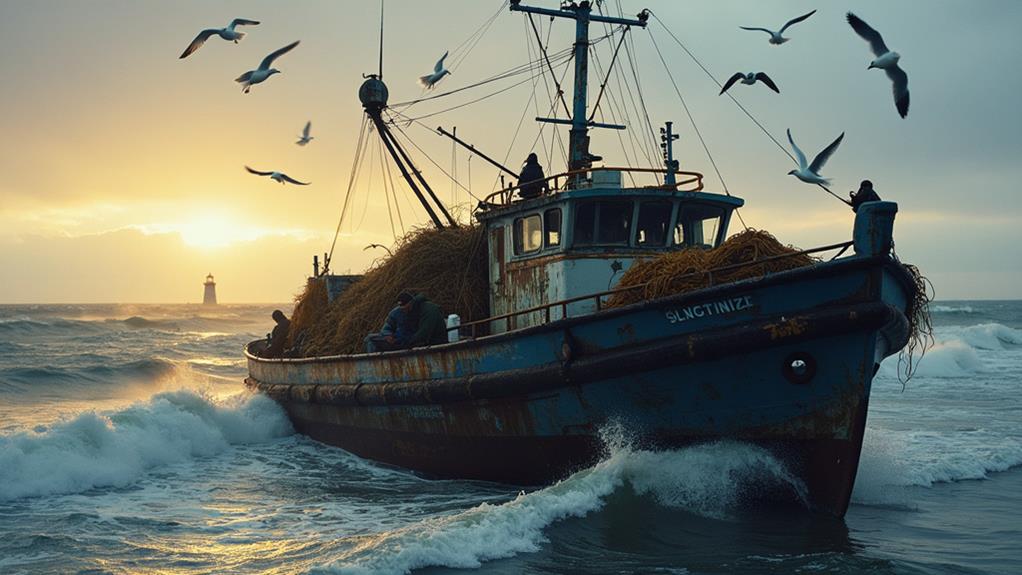
To embark on a career in commercial fishing, you will need a high school diploma, a fishing license, and essential on-the-job training. Many individuals start as deckhands, gaining hands-on experience with fishing techniques and equipment. It's also crucial to complete any required formal fishery programs and obtain specific permits, as these steps are essential for career advancement in the industry.
Essential Skills Required
Entering the world of commercial fishing demands a combination of formal education and practical experience. Typically, a high school diploma is required, along with obtaining a fishing license, which is essential for legal fishing activities. The specifics of this license vary based on state regulations and the type of fish you aim to catch.
Most individuals start their careers as deckhands, gaining valuable hands-on experience by performing fundamental tasks on the fishing vessel. Progressing from deckhand to more advanced positions involves learning various skills on the job, such as operating machinery, handling catches, and mastering fishing techniques. Many commercial fishermen also benefit from vocational training programs that focus on fishing technologies and navigation techniques, which enhance their overall knowledge.
Key skills essential for a career in commercial fishing include:
- Practical Knowledge: Gaining hands-on experience as a deckhand is crucial for understanding the job's intricacies.
- Technical Skills: Learning to operate and maintain fishing equipment and vessels, often through specialized training courses.
- Safety Awareness: Adhering to safety protocols is paramount, typically reinforced by Coast Guard-approved training.
These foundational skills are critical for a successful career in commercial fishing.
Licensing and Training
Building on the foundational skills necessary for a successful career in commercial fishing, it is crucial to understand the specific licensing and training requirements that pave the way to this profession. Initially, you'll need a high school diploma and a fishing license, which is a minimum requirement in many states. The licensing process varies depending on the location, so it is essential to check your local regulations.
On-the-job training is indispensable. Typically, you will start as a deckhand, learning practical skills in fishing techniques and handling fishing equipment. This hands-on experience is invaluable for mastering the intricacies of the trade. Many aspiring fishermen also benefit from completing fishery programs that offer advanced training in maritime technology and sustainable fishing practices, thereby enhancing career prospects.
If you intend to operate boats, Coast Guard-approved training courses are necessary to ensure you understand maritime safety and comply with relevant regulations. Depending on your specific role—whether as an ocean shore commercial fisherman or a fish-processing ship operator—you may need additional permits. Navigating these requirements is vital for a compliant and successful fishing career.
Licensing Requirements
Navigating the world of fishing often requires securing various licenses, which can differ based on state regulations and specific roles. Obtaining these licenses is essential, particularly for commercial fishing. The minimum requirement typically involves a basic fishing permit, but additional certifications may be necessary depending on your activities.
For example, specialized licenses are required for ocean shore or deep-sea fishing. Vessel operators must also complete Coast Guard-approved training courses to ensure safe navigation of fishing boats. The licensing process varies significantly by state, reflecting local regulations and practices.
Maintaining valid licenses is crucial for compliance with fishery regulations and promoting sustainable fishing practices. Key licenses you might need include:
- Fishing Permit: The basic requirement for any type of fishing activity.
- Commercial Fishing License: Necessary for those intending to fish on a larger scale and sell their catch.
- Vessel Operator License: Required for captains and crew members operating fishing boats, involving Coast Guard-approved training.
Meeting these requirements ensures full compliance and preparedness for the challenges of fishing.
Daily Routine
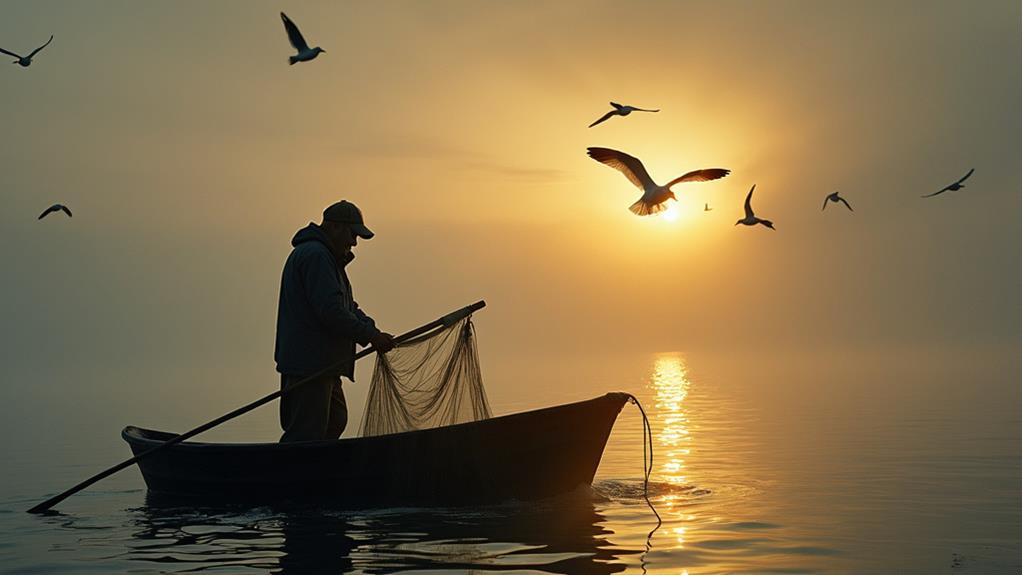
As a fisherman, your daily routine begins before dawn by preparing the engine and navigation lights. After a two-hour journey to prime fishing spots, you cast the nets just as the sky starts to lighten. The rest of the day involves hauling, sorting, and icing the catch, tasks that demand teamwork and stamina, especially in challenging weather conditions.
While the physical demands of fishing are evident, the sensory demands—particularly on your eyesight—are just as critical. Long hours on open water require not just stamina, but also the ability to see clearly and consistently in changing and often harsh light conditions. Beyond these demands and early starts, maintaining optimal vision is paramount for safety and success on the water. The constant glare from the sun reflecting off the water can be debilitating, making it difficult to spot fish, navigate safely, or even read instruments. This is where specialized eyewear becomes indispensable for protecting your eyes and enhancing clarity. For those who require vision correction, investing in high-quality prescription polarized fishing sunglasses can significantly enhance visual acuity and reduce eye strain throughout long hours at sea. These specialized lenses not only protect against harmful UV rays but also cut through surface glare, allowing anglers to see deeper into the water and identify their targets with greater precision.
Early Morning Departure
At dawn, fishermen begin their daily routine to increase their chances of a successful catch. Your day starts with an early morning departure from the quay, where the fishing boats are docked. The first task is to start the engine and activate the navigation lights, ensuring safety as you head out to sea.
Soon, you're steaming toward the fishing grounds, a journey that typically takes about two hours. During this time, you and your crew strategize to optimize your catch for the day. The calmness of the early morning offers a brief moment for reflection and planning.
As the sky starts to brighten, nets are deployed to target predator fish, which are more active in low-light conditions. This crucial part of the day sets the tone for the hours ahead. The routine involves a continuous cycle of:
- Towing: Dragging the nets through the water.
- Hauling: Retrieving the nets back on board.
- Icing: Preserving the catch to maintain freshness.
Your early morning efforts are vital for a productive day at sea.
Catch Sorting Process
The catch sorting process starts immediately on deck once the nets are hauled in, to ensure the fish's freshness and quality. You'll work swiftly to categorize fish by species, size, and condition. In commercial fishing, this is crucial for meeting quality standards and maximizing the value of your catch. Each fish is assessed quickly to determine if it meets market criteria.
Fish that do not meet these standards or are undersized are discarded or returned to the sea. This practice complies with fishery regulations and supports sustainable fishing. CCTV monitoring is often used to keep track of the sorted catch, ensuring adherence to sustainability guidelines and preventing overfishing.
After sorting, the fish must be properly iced to maintain their temperature and prevent spoilage. This step is vital for preserving the catch's freshness until further processing. The catch sorting process requires a blend of speed and accuracy, demanding keen attention to detail to meet the rigorous standards of commercial fishing. Every decision impacts not just the day's haul but the long-term health of the fishery.
Fishing Techniques
Fishing techniques are integral to both the success and sustainability of fishing operations. Fishermen must master various techniques and utilize appropriate fishing equipment to excel in the industry. For instance, trawling nets are widely used to capture demersal fish, a method that necessitates precise timing and an understanding of tide conditions to maximize the catch.
Each fishing technique is tailored to specific target species and environmental factors. Longlining involves deploying a long line with baited hooks, making it effective for catching larger fish like tuna. In contrast, pot fishing employs baited traps to capture crustaceans such as crabs and lobsters. These methods each demand unique skills and equipment, highlighting the diversity within the fishing industry.
Key fishing techniques include:
- Trawling nets: Effective for demersal fish, requiring precise timing and tide knowledge.
- Longlining: Suitable for larger species, featuring baited hooks over extended distances.
- Pot fishing: Utilizes baited traps to target crustaceans like crabs and lobsters.
Mastering these techniques is essential to maintain the freshness and quality of the catch, ensuring the delivery of top-quality products to the market.
Environmental Responsibility

In today's world, environmental responsibility is more crucial than ever for fishermen. You are not just harvesting the ocean's resources; you are also a steward of marine ecosystems. By participating in the Responsible Fishing Scheme (RFS), you adopt sustainable practices that ensure fish stocks remain healthy for future generations. These practices include monitoring your catch quantities and species, helping maintain a balance between fishing activities and conservation efforts.
Adhering to strict environmental standards is essential. Following these guidelines protects the ocean's biodiversity and secures the longevity of your livelihood. Certification from the RFS also instills confidence in your buyers that they are purchasing responsibly sourced seafood, thereby enhancing consumer trust in your sustainability efforts.
Furthermore, initiatives like KIMO's Fishing for Litter are making a significant impact. By collecting and properly disposing of marine litter during your trips, you actively reduce ocean debris and contribute to cleaner waters. This effort benefits marine life and improves the overall health of the marine environment.
Family Business Dynamics
Many fishing operations, like The Crystal Sea, thrive on the backbone of family business dynamics. With generations of experience, this family-run business features brothers David and Alec Stevens as the skippers, supported by a dedicated crew of family members. This setup fosters a strong teamwork dynamic on the vessel, essential for the daily grind of fishing.
Operating out of Newlyn, the Stevens family maintains historical ties to nearby St. Ives, contributing to the local fishing heritage. The collaborative nature of a family business enhances stability within the fishing community, ensuring that knowledge and traditions are passed down through generations. This stability not only helps sustain the family business but also supports the broader community through sustainable fishing practices.
Family-operated fisheries like The Crystal Sea often prioritize sustainability, aligning their operations with environmental responsibility. This approach ensures they can maintain their livelihood without depleting resources, securing a future for upcoming generations.
- Generational Knowledge: Skills and traditions passed down.
- Crew Share: Equitable distribution among family members.
- Sustainable Fishing: Long-term environmental responsibility.
In a family business, everyone plays a role in ensuring the operation runs smoothly, creating a close-knit, resilient team.
Challenges in the Fishing Industry
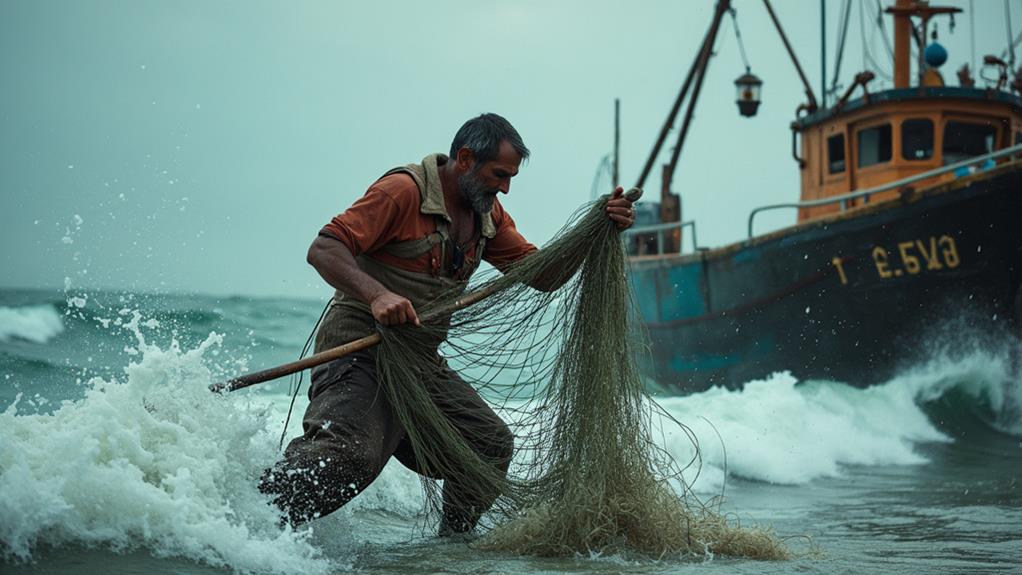
How do fishermen manage the relentless challenges that come their way? Unpredictable weather and sea conditions continuously test their physical endurance and expertise. Navigating through choppy waters and sudden storms makes every trip potentially hazardous. Long hours at sea not only exhaust them physically but also strain personal relationships and induce feelings of isolation among crew members.
Economic pressures add another layer of difficulty. Market price fluctuations can turn a profitable haul into a financial strain overnight. Uncertainties about catch sizes complicate planning and budgeting. These pressures are compounded by the need to comply with strict regulations designed to protect fish stocks, which demand meticulous record-keeping and precise fishing practices.
Operational challenges such as tangled gear due to debris from historical shipwrecks can also disrupt routines. These issues waste time and increase costs, as fishermen often need to repair or replace expensive equipment. Despite these challenges, the resilience and adaptability of fishermen keep the industry afloat, navigating both literal and metaphorical storms.